

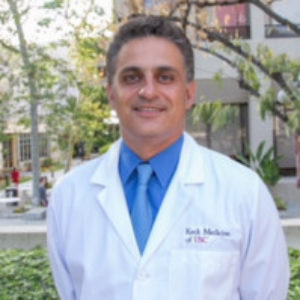
Dr. Alidad Ghiassi presents a lecture on Hand Transplantation to the Medical Student Orthopedic Surgery Interest Group (OSIG)
Transcript
4,607 words · 31 min · 2 speakers
Transcript
4,607 words · 31 min · 2 speakers
Speaker 1In full screen mode there, right? Yes sir. So I can't see you guys, but I can see my screen, and then um please uh chime in when you have questions, OK? Cause I like the interaction.
Speaker 1Pause me.
Speaker 1Um, you know, I was thinking of what, what to talk about, you know, like, I can tell you what a hand surgeon does, what I've done, you know, what I'm currently doing. But then I thought, well, you know, why don't I show you some cool things about hand Surgery.
Speaker 1And um talk about Hand transplantation.
Speaker 1Um, cause that's kind of an uncommon thing, and it involves a lot of different disciplines.
Speaker 1Not just Surgery, but, you know, psychology, you know, it's ethics, you name it, it's all combined into this one procedure.
Speaker 1Um, another name for it is vascularized composite alloy transplantation.
Speaker 1Which really, uh, you know,
Speaker 1Is out there as far as being the cutting edge kind of work you can do in hand Surgery.
Speaker 1And one of the reasons I, I am, I, I got interested in hand in hand Surgery is the fact that you can do complex things like this, or you can do simple office-based procedures, and the main thing that you do need is just knowledge of the anatomy.
Speaker 1Um, and it's it's with a simple set of tools, you can do a lot. Now, you can't do hand transplants, but you can do a ton. So anyone gets dropped off in any part of the world and they're a hand surgeon, they can do a lot of good with the bala xylocaine and, you know, some simple surgical tools and maybe some betadine, but you can get a lot done. Um, so this kind of sums it up. Hand transplantation really sums all that up.
Speaker 1Uh, have this slide up because, uh, you know, to kind of know where you are, you gotta know where you came from, at least a little bit.
Speaker 1You know, um, that gives you a kind of a roadmap and context as to
Speaker 1Where you're gonna go as well.
Speaker 1And this doctor here name is Joseph H. Boys, and he's one of the founders for the field of hand Surgery after the Second War. He was a general surgeon by training, but after the war there's so many devastating hand injuries in young men.
Speaker 1He really dedicated his life to treating them, and really started um the field of hand Surgery in the 50s and 60s, and the USC Hand Fellowship is actually named after him, and it's endowed by his foundation as well. So,
Speaker 1Um,
Speaker 1He's really the original, original hand surgeon.
Speaker 1And why is the hand so important, you know, when you're looking at it, you know, I mean, I, I can't tell you how many times that people say what you do. I say I'm a hand surgeon. They say, oh, I'm a small finger surgeon, or I'm an earlobe surgeon. But I mean, until you get a hand injury, you don't realize how important your hand is. And if you look at it, it is really the end organ that connects us to the world.
Speaker 1So without our hands we can't really do anything, and there's a, there's a large number of people out there who believe that the development of the
Speaker 1The modern human brain correlates with the development of the opposable thumb and the hand.
Speaker 1And there is truth to that, somewhat. We don't know which came first, but
Speaker 1Really, if you look at the cerebral cortex, the face is the most highly represented body part, and after that is the, and the homunculus is the is the human hand. It's really your hands that connect you to the to the outside world, and you can do everything with it, you know, you can manipulate the world, you can talk with it, you can read with it. You can really tell people what you think, right? When you're really upset, um, and
Speaker 1You know, you can tell people how you feel, right? I mean, you touch someone on a, you know, in a certain way, they know exactly what you mean. So it conveys a ton of information, and it's not just another body positioner, it's a sensory end organ that manipulates the whole environment. And that's really important to understand, cause, you know, unlike the foot, you know, you, you lose a foot, you can still do a lot, but you lose a hand and the whole world changes.
Speaker 1That's why people are trying to solve this whole issue of uh loss of the hand.
Speaker 1And Upper Extremity amputations are, you know, they're, they're common. They're not as common as lower extremity, but you get patients losing their arms from trauma, infections, congenital conditions, uh, or vascular disease, and it does have a profound, um, physical and psychological effect on the, on the human.
Speaker 1It's a photo of someone who had a mangled extremity, probably for forklift injury, that's not salvageable, and these are the kind of people, especially if they're young, um, to really benefit from this type of uh Technology.
Speaker 1So what do you normally do, right? You know, you lose a hand. Well, there's options or prosthetic options, um, but they all have drawbacks. So you have the hook, which really, um,
Speaker 1I basically mechanically oriented um.
Speaker 1Set of metal and rubber bands that you manipulate to open and close.
Speaker 1Um, but it doesn't really get your hand function. It gives you more of an assistive function, so you can, you can get by.
Speaker 1You can get a cosmetic hand, which is on the lower um left here. And this is more for, you know, social situations where you don't wanna be seen without a hand, but it just doesn't provide any function.
Speaker 1Um, or you can get a myoelectric prosthesis here where, you know, the signals from the muscle or the nerve connecting to the muscle can power the electronics on the myoelectric. That works pretty well, but it's got some issues, right? It's heavy, expensive, needs batteries to run, and certainly doesn't give you sensory feedback, so you really don't know how hard you're squeezing on something.
Speaker 1And for a lot of patients, it's just compliance is an issue. They'd rather just get on with it. Maybe put a hook prosthesis or cosmetic prosthesis as opposed to more cumbersome myoelectric prosthesis.
Speaker 1So really, at best that we've done so far with replacements is prosthesis and at best, um, you know, something that can work but needs a lot of attention.
Speaker 1So, and then the concept of hand transplation plantation comes into play.
Speaker 1And this is where you're really replacing like with like.
Speaker 1Uh, to improve dexterity, sensation, proprioception.
Speaker 1And also um improve the patient's overall um psychological appearance.
Speaker 1Sorry for the misspelling at the bottom, but the downside of doing this kind of procedure.
Speaker 1is really the immune suppression that goes with it.
Speaker 1Um, and you'll find out more as we talk more. So you can see this patient here.
Speaker 1You know, one way of eating is another way of eating, and
Speaker 1Certainly though, to me the picture on the right seems more
Speaker 1More enjoyable.
Speaker 1So Hand transplantation really is the combination of hand Surgery and solid organ transplantation.
Speaker 1And um if you're wondering how you become a hand surgeon, well, there's several ways. You can be an orthopedic surgeon, a plastic surgeon, or a general Surgery microsurgeon. That all gets you to hand Surgery.
Speaker 1Then solid organ transplantation is really um a different, different field altogether, cause
Speaker 1What they do is transplant organs, but it's the immune suppressive therapies, the multidisciplinary Approach, the complex um care coordination and aftercare pathways that are really important in solid organ transplantation. Um, the technical aspects of it, even though they're important, you know, once you put that organ in, hook it up, then it does its thing.
Speaker 1You know, it's not, you don't have to get it to.
Speaker 1Have nerve regeneration or manipulate or have function.
Speaker 1for that 2 hours that you're putting it in is the critical part, and the rest of it becomes the aftercare. And Hand transplantation really is the combination of um
Speaker 1Combination of the two fields where we took the knowledge base from solid organ transplantation and from hand Surgery and um you know, worked on getting a hand transplant.
Speaker 1And the first one was really done in the 60s.
Speaker 1Um, you know, uh, it was done, I think, in South America, and it lasted at best 3 weeks until the hand got rejected. And the main reason was that the immune suppressant, uh, modalities were not there.
Speaker 1So, um, that experiment was a failed experiment, but it was a thought.
Speaker 1It's really till 3 decades later when people start pursuing this more.
Speaker 1Um, and the reason for the difficulty in trying to get control over the immune suppression is the skin and the lymphatics. They're very immunogenic, and it's really, it was really difficult to try to figure out how to prevent rejection.
Speaker 1But, you know, through some science experiments and more experience, um, it did take another 3 decades in order to be able to, um, to do this, uh, to really revisit this uh procedure all over again.
Speaker 1And uh 1998 was a second attempt at Hand transplantation in France.
Speaker 1And the donor was a 41 year old man who had a head injury, and the recipient was a forty-eight-year-old businessman who had lost his hand in a sketle saw accident.
Speaker 1Um, he had working muscles. He had strong motivation to, to have the procedure done. He even had a psychological evaluation.
Speaker 1And since it was technically feasible, they selected him to get a hand transplant.
Speaker 1So what do you guys think happened next?
Speaker 1Anyone chime in.
Speaker 1Don't be shy.
Speaker 1Shay, you wanna chime in? What do you think happened?
Speaker 2Well, I'm imagining it would be probably a little bit better since it wasn't a cadaver hand and it was from a live donor, but I'm probably wrong, I guess.
Speaker 1No, there's no, I tell you, man, there's no wrong answers, you know, there's only good answers and better answers in my mind.
Speaker 1It's on there, yeah.
Speaker 1Anyway, um,
Speaker 1He lost a hand
Speaker 1Um, it turns out he was actually a prisoner from New Zealand, uh, who lost his hand in the, this is, by the way, you know, pre, uh, pre-social media, so who knows, right? He lost his hand and he failed to take his post-op, uh, uh, medicines, and he rejected the hand, um, because of that, and he wound up actually at the front doorsteps of USC LAC Hospital.
Speaker 1Where he had requested the mummified hand to be taken off, but there was so much media attention at this point that I think the hospital didn't want to deal with it, so they put him on a plane and sent him back to France to get it removed.
Speaker 1Um, the interesting part of this is that the actual doctor who did this was interviewed, and I'm gonna play the interview.
Speaker 1Can you guys hear that or
Speaker 2no?
Speaker 2No, sir.
Speaker 1Can you hear it?
Speaker 2No, we can't. I'm wondering.
Speaker 1Well, I'll just tell you what's happening here. So he's actually, this is the original interview of the patient with the physician.
Speaker 1The physician is the bearded guy on the right, and there's the patient after the transplant, and it's a little bit of a promo fluff piece. Um, then, you know, they're asking the doctor.
Speaker 1What made him lose the hand?
Speaker 1And he kind of doesn't say exactly, kind of says a little bit, and doesn't really say it. He says maybe financial or this.
Speaker 1But the real reason is that it was just poor, poor Patient Selection. I mean, they just picked the wrong person for this procedure. And um it's never the patient's fault in my mind, you know, I mean, we get this into this in Medicine all the time. You know, you did this because it's your fault, but ultimately, the physicians, I think, are responsible.
Speaker 1So, he kind of sugarcoated the interview saying, oh, maybe he should have taken his meds, but yeah, maybe you should have picked better as your first candidate for this uh procedure.
Speaker 1But that didn't stop us because moving forward, you know, a year later, the first hand transplant was performed in the US and at the time I did this lecture, it was the longest surviving hand transplant, uh, known, and it really set the ball rolling. Uh, By the way, Louisville is a very famous hand Surgery center as well. That's where they did it. Um.
Speaker 1And there's even more data to support that these transplants can survive if you are able to pick the right patient and um give them the right uh support with immune suppression, um, and they, you really get reasonable function, even though they have some challenges with um rejections.
Speaker 1So really the question is, you know, who do you do this on? Is it worth it?
Speaker 1Um, you know, it's not life-threatening. It's, you know, life enhancing, and there are some drawbacks from the immune suppression such as, you know, uh, avascular necrosis, diabetes, high blood pressure, and, um, that dilemma hasn't been fully sorted out.
Speaker 1Um, we also, you know, moved ahead and did bilateral hand transplants, and that's another one, where, you know, instead of one, you do two hand transplants at the same time. That takes about 20 surgeons to do two hand transplants all in the same setting on one body. As a matter of fact, uh, this is a pediatric patient. I got, I think a hand, got 2 hands transplanted, and also a kidney transplant.
Speaker 1And to me, that kind of makes sense cause, you know, the picture on the left here, poor kid playing with little, you know, um, rings and not having a real good interaction there, and then he gets a hand and he gets to play with his, uh, with his toys, and he's getting the kidney, um, as well, so the immune suppression is not as, uh, difficult to digest cause he needs the kidney in order to, to not get dialyzed all the time.
Speaker 1And we moved on from there. It really took off. They did a face transplant.
Speaker 1This guy's actually had two face transplants. Imagine that, right? I mean, that's what he looked like. I think his face, I forget what it was, the injury, but a horrible looking.
Speaker 1Accident with, you know, they did some reconstruction of his chin and nose, but then this is what it looks like after the transplant.
Speaker 1Um, and I think he wound up with another one after this cause of some rejection issues, but
Speaker 1And this is stuff of science fiction we could get a face transplanted.
Speaker 1And this guy is the first penile transplant.
Speaker 1Um, yeah, and he's pretty happy.
Speaker 1And he is actually functional. I think he even bore children.
Speaker 1Um, and then we went on from there to do uterine transplants. So really it opened up the whole Pandora's box with, you know, composite, uh, tissue transplantation.
Speaker 1Um, and we might have even gone too far because, you know, these are the places that have had, at least when I checked this last, have had experience with Hand transplantation.
Speaker 1Um, and the function seems to be reasonable for the most part, but we may be overdoing it. Now, I'm gonna play this video. This is our patient.
Speaker 1Can you hear that?
Speaker 1Can you guys hear that? We can't, we can't, we can't hear it.
Speaker 1Yes or no? Yes, you can. No, no, we can't.
Speaker 1What a bummer. OK, so I will play it anyways. I don't know why it's not, I can hear.
Speaker 1So this is his daughter, and this is after the transplant.
Speaker 1He's looking away, asking Ariana to put a hot or cold bottle of water in his hand.
Speaker 1He says this is room temperature water.
Speaker 1And then she mixes it up again.
Speaker 1This is really critical cause the sensation is the hardest thing to achieve, and she tricks him again by putting the warm water back in there.
Speaker 1Temperature.
Speaker 1And she's having a field day.
Speaker 1Go.
Speaker 1So that's the amazing part of it, you know, being able to
Speaker 1Get sensory recovery, and he's, you know, used it for all sorts of activities.
Speaker 1So, you know, when you're looking at this, um,
Speaker 1There's lots of issues, right? I mean, solid organ, there's, it's life saving and Hand transplantation. It's improved quality of life, and really the autonomy of the patient is really important to respect and not to try to push him into this situation, because it could be a bad decision as well.
Speaker 1So really my dilemma was in, I guess back in 2014, I was approached by the hand surgeons at UCLA to join them, to do a combined hand and liver transplant on a patient who had lost her hand because of an IV infiltration infection, and she also had congenital liver disease, and was also mute, so she used her hands to communicate.
Speaker 1Or sign language
Speaker 1Um, so I thought, hey, you know, I mean, we're gonna do good cause she needs a liver, she's gonna get immune suppressed and we can even give her the ability to communicate.
Speaker 1So I joined the team. We did some surgical rehearsals cause you can't, this is not one of those Operations you can just walk into. You got to rehearse multiple times.
Speaker 1It was not easy because, you know, the liver is on the right side as well, so is the hand, the tight space, a lot of
Speaker 1Big egos in the room, everyone wanting to get their space and do their thing, and
Speaker 1You know, when the timing is really critical as well, because, you know, you're putting your liver in.
Speaker 1Um, and doing the hand at the same time, and
Speaker 1It seemed to be something that we could do.
Speaker 1And her name came up on the list, and the Procurement team went down to procure the organ, but the hand had a tattoo on it. Now this is not the hand, but I just have that up there.
Speaker 1And the tattoo is an identifying marker, which according to IRB protocol, cannot be used for transplantation cause of patient uh privacy issues.
Speaker 1So she had a decision to make either a liver.
Speaker 1And no hand or just wait and potentially get sicker from her liver condition.
Speaker 1So what do you guys think she did?
Speaker 1What would you do?
Speaker 1Anyone.
Speaker 1Take the liver, wait for a hand.
Speaker 1You can't wait for a hand though, cause it's two different immune really.
Speaker 1Immune systems that you're dealing with, right? So the initial liver has a certain sort of, uh, you know, immune profile, and then if you take a hand, that's gonna have a different immune profile. So you're mixing and matching. So, so, it's a 11 time shop. Either take the liver, and that's it, you're never going to get a hand transplant.
Speaker 1Or take wait and take the liver in hand. And she did what exactly what you said is she took the liver cause life over limb, and uh she never got a transplant. So, that wasn't the first, that was uh when the launch pad, but never really launched.
Speaker 1And then fast forward to 2016.
Speaker 1This gentleman, Michael Coch, came up, and he was actually a TV producer, reality show producer in LA, totally normal guy, very successful, um, probably busier than he should be.
Speaker 1He was on a flight to, I believe, Maryland, when he's not feeling so well, goes to the ER and they say it's just the flu, gave him a shot of cortisone and maybe some antibiotics, and he went on the plane.
Speaker 1He goes to this meeting and the next thing he knows, he's in the ICU with a on ventilator, dying of multi-system organ failure.
Speaker 1He wound up getting this bizarre um immune condition that is most likely secondary to a viral infection that made all of his end organs fail. So when the body goes into organ failure, all the peripheral, um, organs wind up shutting down. They lose circulation, and you lose those body parts. And some of these patients will even lose nose, ears, kidneys, but he lost his right leg, entire right leg.
Speaker 1Part of his left foot, part of his right hand, and um his entire left hand.
Speaker 1So that's what the right side looked like. They did the removals at UCLA, so he flew back home after he survived the ICU experience.
Speaker 1And he had um removal of the tissue there. That's kind of what it looked like. On the left, it was uh almost the entire hand.
Speaker 1There's the uh median nerve, and um that's with everything removed.
Speaker 1And he was just left with that. Now, partial right hand, no left hand, no left leg, and a partial right foot.
Speaker 1So you can imagine during the morning.
Speaker 1When you need to go to the restroom.
Speaker 1How are you going to put on your prosthesis?
Speaker 1If you don't have a hand.
Speaker 1And
Speaker 1Who's gonna help you?
Speaker 1And if no one's there to help you, what are you gonna do? And if someone's gonna help you, how vulnerable are you? And every time you need to go to the restroom, you have to do, you have to rely on someone else. So you can see how it becomes um more than just the loss of a hand, it becomes just a huge, huge dysfunction.
Speaker 1And his whole life is affected by this, and this is a guy, he's a, I think he was from Pennsylvania originally, he's like a, you know, like a collegiate wrestler and just like one of these guys who is just unbelievable, and this happens to him on a Tuesday, right?
Speaker 1Without any warning.
Speaker 1So he was selected because he wanted to get this done and he went through extensive psychological testing, and he was found to be a good candidate for it.
Speaker 1And he was put on the transplant list, and his number came up.
Speaker 1And when it came up, the team went down to Orange County to procure the organ from the donor who was um 40 year old with a um a stroke, a vascular stroke.
Speaker 1And the organ seemed like it was gonna fit, and um when we heard that, the patient was brought back to the operating room. And I was just in my office at in uh down the street from UCLA.
Speaker 1And um was finished seeing my patients and just walked over to the hospital.
Speaker 1And we got started. Um, these markings here, by the way, are vein mappings because the veins are hard to find. So we mapped the veins while the patient is falling asleep to you know where they are.
Speaker 1And then this is what happens next. So you wind up having to dissect every single little vessel, nerve, tendon, muscle, and bone.
Speaker 1Is the radius.
Speaker 1Is the unknown.
Speaker 1And there's all the nerves, and you can see we tag every single little thing that you learn in your anatomy lesson, cause we gotta match it up to this.
Speaker 1So that's the donated um hand from Orange County with the vein magazine.
Speaker 1And you can see there's saline being run through here and it's on ice to keep the temperature down.
Speaker 1And um the same kind of a thing happens to the donor. So every single tiny little vessel, nerve, tendon gets marked.
Speaker 1You know, these are some of the things you see in your anatomy class, like palmaris longus and extensor carpi radialis longus.
Speaker 1Uh, median nerve, and then after that point,
Speaker 1We attached it to
Speaker 1So here you can see plates and screws being used to connect the bone.
Speaker 1Um, after that point, then we go ahead and start working on the tendons.
Speaker 1And we actually want to do the vessels as late as possible. As soon as you start bringing this thing to life, then you can't see anything. Your visualization is gone.
Speaker 1Um, because of all the bleeding, and the Surgery becomes extremely, extremely tedious, and it becomes very slow in pace. So you push as hard as you can to get as much as you can done within a certain amount of ischemic time, cause the clock's running, you know, there's tissue necrosis happening. And at some point, you let down the clamps on the blood vessels, and the hand comes alive.
Speaker 1And here it is, 11:12.
Speaker 1p.m.
Speaker 1That we just let the clamps down, the hand is nice and pink and profuse, and everyone's so excited, they said, Well, we're going to take our masks off. Now, this is pre-pandemic, so it was OK to take your masks off.
Speaker 1But um that's the whole team and everyone's got a role, and everyone understands their role. This is Doctor Azari Azari who's the, the lead um transplant surgeon.
Speaker 1These guys are orthopedic surgeons from the Kaiser Group down in Orange County.
Speaker 1Um, I'm there from USC. These are the microsurgeons, and this is the nurse anesthesiologist team, and there's our, um,
Speaker 1Um, there's our scrub tech who had no one help her take the mask off.
Speaker 1Um, and this is a brilliant moment because, you know, the hand was alive. Everyone took a sigh of relief and they said, OK, let's get back to the rest of it, which took till 6 in the morning, 67 in the morning the next day.
Speaker 1And here he is the next morning, first look.
Speaker 1And look at his face and look at his hand.
Speaker 1So he already has control.
Speaker 1Opening and closing his hand, even though he has that sensation.
Speaker 1And it's a very, very, very bizarre experience for him, but he wants to use it.
Speaker 1And then you got, you know, therapy afterwards in the hospital 5 days, and 2 weeks later, everything's starting to heal up.
Speaker 1And here he is at
Speaker 16 weeks.
Speaker 1And
Speaker 1Dribbling a basketball.
Speaker 1OK
Speaker 1And his X-rays are showing that this is him, you know, the bone is healed. This is where we did the connection between the bones, and it's already healed. These are the plates and screws. These are tiny little surgical clips there. But the thing is his, and as a matter of fact,
Speaker 13 months later,
Speaker 1He's doing that.
Speaker 1And
Speaker 1Doing this.
Speaker 1And doing this.
Speaker 1And this
Speaker 1Too bad you couldn't hear the sound on that, but it was the Rocky Balboa song in the background there where he's doing this too.
Speaker 1And tying his shoelaces, right?
Speaker 1And this, I can't even do this.
Speaker 1And this is an important position by this called intrinsic plus position. This tells you that the nerves have regrown, so he can actually do that. People who don't get nerve regeneration usually get a hand like that. So to be able to do this is unbelievable. He's running marathons and
Speaker 1Doing all sorts of things he likes, and even, you know, and doing some fine dexterity work like this.
Speaker 1And finally,
Speaker 1It's called a McConnell test, you know, this is how the therapist wind up figuring out how good you are.
Speaker 1Of what you're doing by
Speaker 1Doing certain tasks.
Speaker 1All right, so I'm gonna pause here cause that's all I gotta share with you.
Speaker 1And see if you guys have any questions.
Automatically transcribed and not checked by a person — it may contain errors, particularly in names, drugs and dosages. The recording is the source.
Check yourself
5 questions5 questions on what was actually said in this recording, and we remember how you did. Sign in to take it — an account is free, and nothing else on doc.social asks for one.
AI-generated from this recording’s transcript, not written by the speaker. Tell us if a question misreads what was said.
Related lectures
 Lecture
How Do Active Cancer Diagnoses Affect Total Joint Arthroplasty Complication Rates?
There is currently a paucity of data analyzing total joint arthroplasty (TJA) disparities among patients with active cancer diagnoses.
Lecture
Targeted Nutrition in Orthopedic Surgery - A Missed Opportunity to Enhance Outcomes
Surgery triggers a series of inflammatory, immune, and metabolic responses. The stress response leads to an increase in protein breakdown that outpaces protein synthesis. The body's natural store of essential amino acids exit skeletal muscl…
 Lecture
Rotator Cuff Repair with Biobrace augmentation and Bone marrow concentrate
Take a look at how to increase your success rate for healing a torn rotator cuff!