

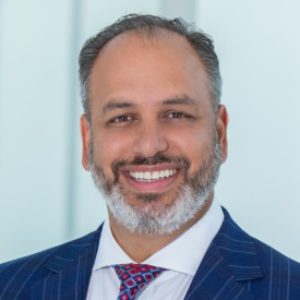
Interview by Oliver Sharpe with Amp Recover with Dr. Wael Barsoum, President and Chief Transformation Officer, HOPCo
Transcript
1,697 words · 10 min · 2 speakers
Transcript
1,697 words · 10 min · 2 speakers
Speaker 1Hello friends. My name is Oliver Sharp, and this is Fresh Perspectives from AMP Recover. Very excited to be joined today by Doctor Will Barsoom, President and Chief Transformation Officer at Healthcare Outcomes Performance Company, also known as HOPCo. Doctor Barsoom, how are you today?
Speaker 2I'm great, Oliver. Thanks very much.
Speaker 1How are you doing? I'm doing well, thank you. I'm very excited for the opportunity to speak with you. Uh, would love to start to hear a bit about your background and your path, uh, to your current position as a healthcare executive.
Speaker 2Great. I'm actually an orthopedic surgeon. I did my uh residency at the Cleveland Clinic followed by a uh fellowship in adult reconstructive Surgery, Hip and Knee replacement, uh, at New England Baptist up in Boston. And afterwards, uh, went back and joined the Cleveland Clinic as a staff doctor, first down in Naples, Florida, then in Cleveland, Ohio.
Speaker 2Uh, where, uh, I, uh, built a pretty busy practice and had a lot of fun, ended up, uh, becoming the chairman of a group called Surgical Operations, which ran about 200 operating rooms throughout the Cleveland Clinic Health System. So, we ran a Supply chain, we had about a billion dollars P&L, we had, uh, a nursing reported to the group, and really built a lot of, of, of team camaraderie in that.
Speaker 2Um, and, uh, eventually was offered the opportunity to come down to Florida and become the, uh, CEO of Cleveland Clinic, Florida. I came down here about 6 years ago, and, uh, when I first got here, we had 155 beds with around $400 million of annual patient revenue. Uh, 6 weeks ago, I handed over about 1080 beds with close to $2 billion in annual patient revenue to, uh, one of my mentors, Joe Iannati, who kind of took over.
Speaker 2Um, so that's kind of been my path. The, the, uh, you know, great organizations, I think do a really good job of, of, uh, identifying future leaders and, uh, putting them in the position to succeed and, and making sure that they learn, uh, what it takes to lead in healthcare today. So, I've had the opportunity of taking courses at, at Kellogg, at Harvard Business School, at uh Harvard School of Public Health, uh, and then our own courses, uh, at the Cleveland Clinic, which I think did a great job in preparing me for what I'm doing today.
Speaker 1And you have a tremendous track record there, uh, at Cleveland Clinic, and you oversaw some great growth. What was it about HPCO, uh, their Business, their mission, and this particular position that intrigued you and made you wanna make the change?
Speaker 2First of all, David Jakovsky, who's the founder and CEO of HPCO, has been a very close friend of mine for about 15 years.
Speaker 2Uh, he was really a very, very forward-thinking person when he started thinking about how do we truly incentivize our patients, our, and our caregivers to improve the healthcare continuum, to, to, to take muscular.
Speaker 2Skeletal health, make it a focus. I mean, it's a huge spend in, uh, from CMS or private payers. You know, how do we make it a focus and actually make patients healthier when it comes to the muscu, their musculoskeletal health? I came from a very fee for service oriented world, but recognized that fee for service was not the future of healthcare, right? We, we had to evolve over time.
Speaker 2HOPCo is a company that's really put its money where its mouth is, right? They're taking full risk on musculoskeletal health, they practice what they preach. I was actually blown away by the depth of knowledge at HOPCo, by the, by the strength of the team, by the culture of the organization.
Speaker 2And I just felt that for me, uh, that was the right step in my career. I had really worked at an incredible organization that was really the pinnacle of the traditional delivery of healthcare. And now it was time to try something that was different, that in my view, is the pinnacle of value-based healthcare delivery when it comes to musculoskeletal health.
Speaker 1And you are in a unique position, uh, to tackle this problem as, uh, a clinician as well as an executive. Can you talk a bit about value-based care? Uh, who stands to benefit from a transition towards this value-based model? And what are some of the challenges that, um, providers and organizations might face as they undergo this transition?
Speaker 2Yeah, that's a great question, Oliver. So, so, you know, the beauty of value-based care is there is honestly no loser.
Speaker 2I mean if, if, if you look at what we spend in the United States today, which is close to 20% of our gross domestic product on healthcare.
Speaker 2And it goes up at a rate of anywhere between 5 and 8% a year. That's, that's not something that we can continue to do. I it's just not compatible with life. At some point, we have to bend that cost curve. And there's always this perception that, that there's, that there's friction, right, between the provider and the insurer, uh, or the provider and the hospital. That friction doesn't need to exist.
Speaker 2Uh, if we can deliver a higher quality product for lower cost, who wins? The patient wins, the payer wins, the hospital wins, the physician wins, uh, and most importantly, society wins because we've taken cost out of the system, and we've improved the quality of care that's being provided in that system. The biggest challenge to, to delivering true value-based healthcare.
Speaker 2Is the fact that it does require some disruption. Uh, there are, you know, there are 5000 hospitals in the United States. Almost all of them make their money on fee for service Medicine. And the idea of providing healthcare in lower cost environments.
Speaker 2is almost counterintuitive to a hospital system which makes all of its money by admitting patients to the hospital. So, again, you've gotta align the stakeholders so that the hospital wins when you take out costs, the provider wins when you take out costs, the patient wins when you take out costs.
Speaker 2As does the payer in society. So that's really the challenge is how do you disrupt yourself? And the truth of the matter is, if you don't disrupt yourself, you're really in danger, right? You're, you're in danger of being the next Nokia or the next Kodak. If, if you kind of sit back and say, well, I'm great at cell phones, and I don't believe that smartphones are ever gonna make a difference, well, guess what? Everybody has a smartphone today, right? Or digital photography is not gonna be the next big thing.
Speaker 2I mean, how many people still use film, right? That's just the reality. Times change and you have to be ready to be disrupted.
Speaker 1Well, and disrupting healthcare, no small task, um, but we have seen some disruption from outside the Business and healthcare world just, uh, from COVID-19 in the face of a, a global Pandemic which has, uh, disrupted healthcare and really had, um, healthcare providers and organizations have to, uh, really adapt quickly to
Speaker 1To be able to still deliver care. Uh, a lot of that had people turning towards Technology. Um, what are your thoughts on recent advancements in Technology for remote patient monitoring and Telehealth, uh, a lot of which have, uh, really gained some traction out of necessity, uh, during COVID-19, but it's also being well received, I, I feel like on both the patient and provider side.
Speaker 2So when I think of value, I think of, of, of an equation. And the equation has quality and access in the numerator.
Speaker 2And it has costs in the denominator. So you can drive up value by either improving quality or improving access or both, or by decreasing costs. Now, the beauty of what we're seeing today with Telehealth and remote patient monitoring is it does all of the above. It gives patients much better access to their healthcare team, does it at at a fraction of the cost.
Speaker 2And through that access, hopefully, leads to an improvement in quality. So again, you know, a great example of aligning all the stakeholders and ultimately seeing a benefit that comes straight to the patient, which is the real, you know, what we really.
Speaker 2We want to see. Good example of that, like you said, is, is what we've seen with, with COVID-19. As patients have been more hesitant to come to the hospitals, as we have intentionally tried to decrease the number of people in any single site at one time, we've all adopted the use of Telemedicine. Uh, and it has been nothing short of a spectacular surprise in terms of how well it's working.
Speaker 2You know, as an orthopedic surgeon, I would frequently feel bad asking my Total Knee Replacement patients to come back to the office 4 weeks after Surgery or 8 weeks after Surgery, especially when they lived 1 hour, 2 or 5 hours away. It just didn't really make any sense, but that was what everybody expected. To be able to now just log on and spend 10 or 15 minutes with them face to face and see how they're doing, or if they're utilizing
Speaker 2You know, sensors that tell me how well their knees flex and extend. I don't need for them to jump in the car and drive all the way over and sit in a waiting room and check in and, and, and, and then see me. It really is not a great use of their time, and it's unfair to them. So, again, without a doubt, a really great advance in healthcare, uh, at a, at an absolute rocket rocket pace.
Speaker 1Well, it certainly has been, uh, an exciting time. Lots of disruption, as you mentioned, uh, but all to the net benefit of all the stakeholders involved. Um, congratulations on your new position there at HPCO. Thank you so much for your time today. I really enjoyed the conversation.
Speaker 2It was my pleasure, Oliver. Thanks for having me.
Automatically transcribed and not checked by a person — it may contain errors, particularly in names, drugs and dosages. The recording is the source.
Check yourself
5 questions5 questions on what was actually said in this recording, and we remember how you did. Sign in to take it — an account is free, and nothing else on doc.social asks for one.
AI-generated from this recording’s transcript, not written by the speaker. Tell us if a question misreads what was said.
Related lectures
 Lecture
How Do Active Cancer Diagnoses Affect Total Joint Arthroplasty Complication Rates?
There is currently a paucity of data analyzing total joint arthroplasty (TJA) disparities among patients with active cancer diagnoses.
Lecture
Targeted Nutrition in Orthopedic Surgery - A Missed Opportunity to Enhance Outcomes
Surgery triggers a series of inflammatory, immune, and metabolic responses. The stress response leads to an increase in protein breakdown that outpaces protein synthesis. The body's natural store of essential amino acids exit skeletal muscl…
 Lecture
Rotator Cuff Repair with Biobrace augmentation and Bone marrow concentrate
Take a look at how to increase your success rate for healing a torn rotator cuff!