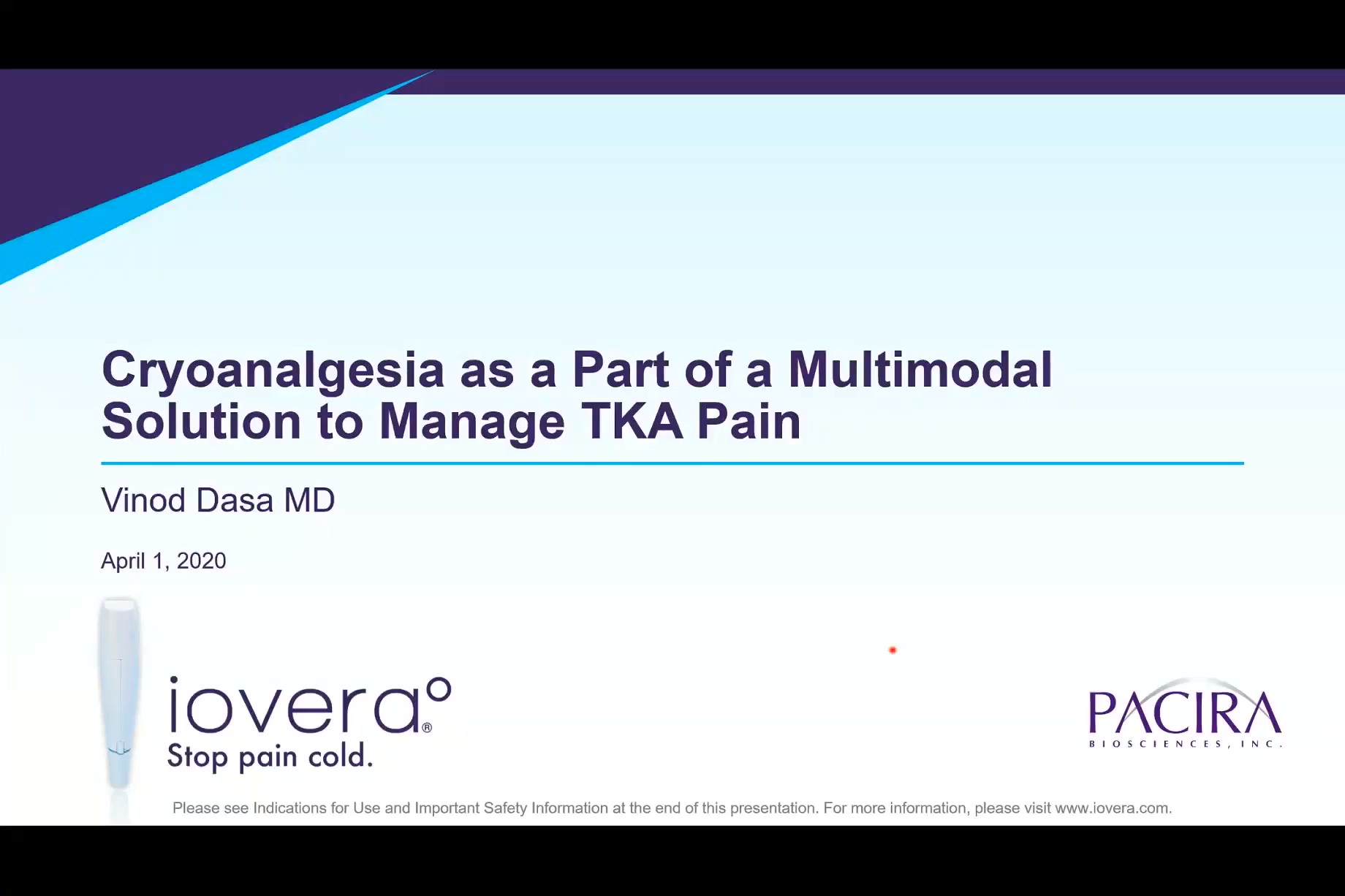
OK, hello world, Doctor Scott Sigman, your favorite opioid sparing orthopedic surgeon, healer of knees and shoulders left and right.
I've been passionate about opioid sparing Surgery for over a decade. It's my thing, it's my gig. I travel all over the world talking about it pre-pandemic. So, thrilled that I can sort of give an uh uh sort of the latest techniques about what we're doing with opioid minimization in the operating room, uh, for this lecture, which we're specifically putting on Doc Social. Uh, so, we really hope you enjoy it. It gives you an up to-date moment about what's happening, how I'm thinking, and really what we're currently doing on a daily basis. Um,
So, in, in Other, in Other things that I do, I'm also the host of the Ortho Show podcast where we bring you the best of the best in the orthopedic world, uh, orthopedic surgeons and the like, who are basically telling their very unique stories. Uh, we love it. It's 30-minute shows, uh, found on all places you listen to podcasts. It's a great listen if you're in the orthopedic world.
In addition, my opioid sparing alternative philosophy has brought me to be the chief Medical officer and founder of Ortho laser orthopedic laser Centers, where we're using laser energy, basically as an alternative treatment option that's non-opioid, uh, non-painful, can't hear it, feel it, or see it as an alternative treatment for the Pain and inflammation of orthopedic conditions. So, also something to really, uh, consider, uh, if you're interested.
So, uh, I do have disclosures. I am a paid consultant for both the Pucinhes as well as, uh, Pacera, as well as for Bodak Pharmaceutical as well. So, they're on our radar. What does that mean? It means that you can't willy-nilly do whatever you want anymore and just write scripts in the old fashioned way. There's basically, uh, uh, prescriptive, uh, databases at this point. You have to look up every patient you're, you're writing a script for. It's very much monitored compared to what it was in the past.
And basically, if you start writing crazy amount of prescriptions, then the US attorney is gonna give you a call, cause they're watching you, the pendulum has really swung in the direction of an opioid sparing Approach, this unfortunate doctor lives in my community.
Uh, and he basically was a Pain specialist, was writing out tremendous, uh, volume of, of, of narcotic prescriptions, and was indicted for involuntary manslaughter, cause one of his patients was tied to one of his, uh, his repetitive, uh, opioid prescriptions. So, uh, the world has changed, you have to do this stuff in order to be able to maintain, uh, your, your practice, you have to become an opioid-sparing surgeon, uh, if you wanna maintain your patience, and, uh, and continue to move forward in a safe and effective way.
At the end of the day, this is what you want. This is a 17 year old kid, status post, a quad tendon ACL in the PACU, smiling, pain-free, 1 hour after his Surgery, no peripheral nerve blocks. This is basically a liposomal bupivacaine block uh to the soft tissues at the time of the Surgery. He is pain-free, sipping a soda, and literally on his cell phone. How happy is that? These are the kids that were most vulnerable for potential severe opioid addiction, so we're thrilled that we have this as an option.
So, here again, this uh gentleman is a 10-day status post Total Knee Replacement. Uh, we did a preoperative ayo vera block, which we'll talk about. Then we did a liposomal buppiviccaine infiltration block at the time of the Surgery. He's 10 days out from the Surgery. You can see how happy he is based on that big broad smile of his. Uh, but yeah, he's got near, you know, 0.
To 110 degrees range of motion. I'm not, not, not a little happy about his flip-flops here, but he doesn't trip, which is good. No assistive devices. He's now, again, 10 days out, able to walk and ambulate, and he's not on any prescriptive Pain medication at this point. And how remarkable is that for a Knee Replacement, uh, that's a real game-changer for how we're treating these patients. So, it pisses me off whenever I hear, oh yeah, I'll use opioids, they're really inexpensive, you know, that's why you should use them. Especially compared to those opioid alternatives that you're talking about, cause they're really expensive, right?
Well, how expensive is the opioid epidemic to society? How about the loss of life? How about loss of Productivity, excess healthcare, government assistance, the criminal justice system? We're spending billions and billions of dollars on the on the post-apocalypse of this opioid epidemic, of all the things and, and create the problems that we have created. Uh, it has to.
Change and it is changing, fortunately. So, here's some numbers from the Commonwealth of Massachusetts. You can see here, again, absolute, you know, uh, billions of dollars that have been spent on emergency rooms, the economy, the loss of life, the Business absenteeism, uh, the state budget for substance use disorder, on and on and on for the overall cost of this opioid epidemic.
So, you know, how did we get here? Well, you know, we were all taught the same thing, you know, Orthopedics hurts, you're gonna use opioids cause they're inexpensive, and they're not overly addictive, and you gotta make sure that your patients are out of Pain. And so what happened? The operating room basically became a gateway to the opioid epidemic, because these opioids are so tremendously addictive, much more so than we ever anticipated or learned, especially for me in medical school and and residency and fellowship. So, uh, we're gonna go through that because the details are really so profound.
So, this is, this is one of the most important slides on the deck, and, and this is from uh the CDC from their MMWR weekly journal that gets put out. And basically, the, the, the crux of this is that, I'm gonna give you three numbers, 6, 13, and 30.
So, if you take 100 patients and give them a script for 24 hours of of narcotics, 6 out of 100 will still be on opioids at 1 year. If you give a 10-day course to 100 patients, 13 out of 100 are still on opioids at a year. And if you're kind enough to give them 30 pills or 30 days' worth, then 1/3 of those patients will still be on opioids at 1 year.
These medications are profoundly addictive, which is why we see what we do. One of my favorite, you know, sayings is, is that, um, you know, addiction, uh, you don't choose addiction, addiction chooses you. And we don't have the ability to understand who those 6, 13, and 30% are. So, really, you have to assume that everybody is potentially one of those. So, remaining opioid naive as much as you can, really is the best possible.
way to treat your patients in the, in the acute Pain setting of, of surgical intervention. You can see the impact here. Orthopedists, you know, we're right in the thick of this cause what we do hurts. You can see as well, 4 out of 5 new heroin users started on misusing prescriptive painkillers. So, so, you know, anyone that says, oh, it's, it wasn't Orthopedics, it was the Primary cares and, and Pain specialists. We were right there, people. We were definitely a part of what was happening.
You can see here, the percent of newly persistent opioid patients, again, Orthopedics, is a big chunk of that because of what we do and how, how, how painful it is. So, coming up with solutions for opioid alternatives to avoid opioids, really was really an, an important milestone for us. So, if you take a look at the healthcare system, really, opioid-related deaths are one of the nation's leading preventable public health problems. We can do this, we're doing better than we were. We still have a ways to go. At the end of the day, we wanna perform Surgery safely and effectively, get our patients back.
To activities of daily living, minimize their post-op complications, opioid-related adverse events, and, and readmissions to hospitals, and then hopefully, be able to save billions of dollars to the healthcare system, because the way in which we're treating patients. So, we have to spend a little bit more on these more expensive opioid alternatives on the front side of the epidemic, so we can prevent some of the overall cost to the system on the backside of the epidemic, that's for sure. So, you can see here, opioids, uh, you know, and substance use disorder rolls into the workforce, as you
You can see here, there's much more work, a greater number of, uh, missed workdays, reduced Productivity as well, associated with this. So, all of these patients that then become a part of this process, unfortunately, move into society and create issues there as well. Workers' comp, as many, um, uh, as long-term opioids, they don't even Return to work. So, they basically wind up having Orthopedic Surgery, they're out of the workforce, they go on opioids, they become addictive, and they never return to the workforce. So, again, really looking for these alternatives is so important.
And, you know, in the midst of this opioid epidemic, there's a lot of changes that are happening at this point. And these changes are coming from Medicare, from CMS, and these ideas of these Outpatient models where you're going to work together to come up with solutions to try and save money for the system, and improve quality outcomes for our patients as well. And I make a very strong argument that any bundled payment or overall comprehensive care for Joint replacement has to have an opioid sparing uh arm to it.
Otherwise, you're going to have all of these secondary events. So, what do we wanna do? We wanna reduce the length of stay, higher quality of life, reduction in cost to the system, you know, reduction of Pain, not having to go to rehab facilities, and certainly trying to reduce readmissions and re-operation. So, an opioid-sparing philosophy dovetails beautifully with that as well. So, it's definitely time for a change. Everyone agrees. You can see here across.
Uh, all of the societies, all of the major societies have embraced at this point, an opioid sparing philosophy, trying to minimize opioids for the post-surgical patients. And now patients are demanding it too. In many surveys now, the patients understand, they know people that have succumbed to this epidemic, and they're seeking out, looking for doctors that were gonna practice opioid-sparing surgical intervention. I can tell you,
For the surgeons out there that are listening to this, this lecture, the most liberating thing that you can do in clinical practice is to become an opioid-sparing surgeon. What does that mean? Well, it means that you're not getting calls from angry, angry patients who are pain-seeking, because they just don't get to the point of opioid addiction. You're not writing refills on prescriptions for patients on a routine regular basis.
And acting as a Pain management specialist, having to wean patients off of medication. So, it's absolutely liberating in your clinical practice, and you're winding up, you know, really amazingly, uh, helping your patients, uh, get through their process of healing as well. So, again, this is the plan Against Pain. I was a, a proud member of this with Gabby Reese as the original Wonder Woman.
Uh, she's married to Laird Hamilton, she's a former professional volleyball player, model, uh, TV spokesperson, etc. etc. And her and I basically went around, uh, the country, really developing a plan to empower patients to let them know that they can find and identify opioid-sparing surgeons across the country. And that really has taken hold, and we're, I'm very proud to have been a part of that. So, what are we gonna do in order to make this work? Well, the multimodal Approach is what we do, and what does that mean? It means we're going to attack Pain from many different angles.
And we're gonna try and do that while minimizing opioids. We're gonna use medications that work in different ways and different pathways. So we could have some that go to the brain across the blood-brain barrier, others can work directly by modulating the spinal cord, as well as transmission of those impulses of Pain back to the brain with local anesthetics, and we can use anti-inflammatories, as well at the skin level, which reduce the prostaglandin mediated inflammatory reaction that creates Pain and inflammation.
So all of these things should be, uh, you know, identified and used. I would like to describe them all as arrows within my quiver.
So preoperatively, what can we do? We have this thing called Ayovera, which we're gonna talk about, which is a cryoaccentovesis device. It's temporary, that temporarily freezes nerves. We can use medications such as IVAjeso, which is an IV meloxicam, which is an anti-inflammatory medication, and then we can use things like oral Tylenol as well. And then, uh, we can also do regional blocks preoperatively, as well as spinal uh anesthetics, which can be done intraoperatively, as well as local anesthetics that can be infiltrated into the local wound as we're working.
And then there's also postoperative management as well. Take out your pen and paper, I'm gonna give you the cocktail that we use, and you, we use it routinely with great success. We use gabapentin 300 mg POQHS for 5 nights only while sleeping to help with Pain relief and sleep. We use meloxicam 15 mg uh once a day for another 5 days.
And we physically write a Tylenol prescription for 1000 mg POQ8. It's not optional, it's not over the counter. Tylenol is a great Pain reliever, and we want our patients to be taking it in the perioperative window. And then we provide them usually 5 to 10 pills of the short-acting OxyIR uh medication, and we
Ask them and tell them, it is not necessary to take these medications. As far as the OxyIR, the narcotic, you only take it if you absolutely need to, and most patients can go through the surgical intervention without taking a single oxyIR pill for most orthopedic surgical interventions at this time.
So we talked a little bit about Ayoure vera. What is it? It's a pre-operative treatment that we do 7 to 10 days typically prior to the Surgery. It's a it's a cold treatment's cryotherapy that freezes the nerves. It creates a temporary axonomesis. It doesn't kill the nerve, it doesn't ablate the nerve, it just puts it to sleep. The axon goes away and then it has to regrow. The regrowing of the axon takes about 3 months to happen. During that window, basically, you're providing Pain relief for a patient across the Knee when they're stretching and moving their Knee. So that's for the
Parafemoral cutaneous nerve and the infrapatellar branch of the saphenous nerve. It's done under a local anesthetic. It's, it's near painless. Patients tolerate it well. It's immediate Pain relief. They literally feel better when they're done. And then over a 3-month window, over 1 to 2 millimeters per day, the nerve will grow back. So, it's simple, percutaneous, using the cold therapy, designed to relieve Pain. It's immediate, safe, and effective.
ect ive it's non-systemic, and it has a long-lasting nerve block, all of which are really terrific in that pre-operative window. We can use it for any of the lower extremity major surgeries, such as a Total Knee Replacement, if you're doing uh partial Knee replacements, if you're doing major cartilage procedures with osteotomies or even ACL reconstructions, all will tolerate this as an excellent treatment option.
Uh, just to give you a study here, which is a multi-center prospective sham controlled double-blind study, you can see here 180 patients over multiple sites. At the end of the day, they took a look at Pain scores, uh, uh, pre and post, taking a look at both Ayovera and control group, and you can see here the dramatic reduction in Pain and discomfort associated with the use of Aovera. The number one thing that you see is some bruising typically at the site, but everyone typically will tolerate the, uh, Ayovera treatments very easily. What else do we do?
Uh, in order to try and, and, and move on with our Pain control, so now we, we're gonna move away from this sort of, you know, cryotherapy. Now we're gonna use an anti-inflammatory. And, and basically, Anjeso, which is IV meloxicam, is the first and only once daily IV analgesic, that's a, that's an anti-inflammatory.
It works beautifully in that perioperative window as well. It can be given directly before the Surgery, or it can be given during the Surgery, depending on the preference of the anesthesiologist. Uh, but at the end of the day, it provides 24 hours of Pain relief. It has excellent demonstrated safety and tolerability. It's a COX-2 preferential anti-inflammatory, which is important because it stays away from the kidney, it stays away from gastric problems, and also does not create platelet issues. What it's doing is basically blocking, uh, the, um,
Anti-inflammatory effect, uh, that's associated, uh, with, uh, the prostaglandin mediated response that happens typically, uh, at the skin level.
Uh, it is a once daily IV push. Uh, so, basically, um, the, it's right inside the omni cell for the anesthesiologist, uh, and they, uh, basically give it the put an IV push at the time of the surgical intervention in a safe and effective manner. You can see here, when used in a, in a, a bunionectomy study, which was the bone portion of the study that was done for safety and efficacy.
There was 31% less Pain associated with these patients, which is really, you know, quite impressive, as one more arrow in our quiver, working in a different way than aloe vera, but still also providing a non-opioid Pain reliever. So, super happy with that.
And so from there, we can then move on to uh the anesthetics, and we all know about anesthetics, they work well. The problem with anesthetics has always been the time in which they work. They're short-acting, and they would sort of wear off at the worst of time. I like to talk about the storm of Pain after Surgery, and it's really that 1st 72 hours after Surgery.
So, what we wanna do is give our patients a soft landing. If we can numb up those nerves for for 48, 72 hours, the patients will have far less Pain. It, Surgery does not hurt in 3 days like it does when you first take a knife to the skin. And so, that's the philosophy we're doing here. It's part of our opioid minimizing.
Pain management strategy, longer duration of, of, of effect than standard um um anesthetic agents. It's the liposomal buppivacaine, it's this Depafoam, which basically is a lipid that houses the buppivacaine. So, the medication's old school, it's not anything new, it's just really the delivery system. And the Depafoam sort of breaks down over time, it's biocompatible, and then the, the uh bupivacaine gets released, creating at that time, the anti-inflammatory effect that we're talking about.
So, uh, the idea too, with, with liposomal bupviccaine is because it's in the liposome, it doesn't get diluted if you add fluid to it. Uh, basically, it just stretches out how many of those liposomes can be placed into the area of the surgical intervention. So, we typically will combine it with additional
Marcaine and even saline to increase the volume, so that when we place the liposomal bupivacaine, it goes to all the places in which the surgical intervention has been had. That's the key for successful use of this medication, the technique, getting it to all of the nerves that have been injured at the time of the surgical intervention.
The latest indication now is for liposomal bupivacaine is for an interscaling brachial plexus nerve block, which has really been profound, and so much better for our patients that are going, undergoing Upper Extremity Surgery, such as Rotator cuffs, instability Surgery, and Shoulder replacement. These patients typically had severe Pain and discomfort, many of which went on to opioid addiction, because the blocks would wear off at 12 to 20 hours in the worst time period. Patients would have severe rebound Pain, but not anymore. They get this longer Pain relief that can last outwards even
4 to 5 days. So, these patients have had real improvement in their quality of life, and now we're doing Rotator Cuff, as well as uh total Shoulder replacements as outpatients, uh, with basically no narcotics needed required post-operatively. It's really very, very, uh, amazing, the improvement that we're doing. So, you can see here in the single-shot, uh, nerve block, most of the time, the motor functions out for about 24 hours, sensory functions about 36 hours, and Pain relief can go out for about 4 to 5 days. Again, in my clinical practice,
Uh, patients are essentially now Opioid Free after undergoing this block for major surgical intervention. You can see here the administration guidelines, it's usually about 10 cc's of the XL, which is mixed with, um, uh, 5 to 10 cc's of either 0.5%, or 0.5% uh marcaine. It's done under an Ultrasound administration by the anesthesiologist, most of the time in a preoperative fashion, uh, and that, again, works exceptionally well. I showed this, this, this person, because this is one of my PACU nurses, and I'll never forget it, we were about 2 weeks out.
From when we started doing the blocks, and she pulled me aside, she's like, I gotta talk to you, Scott. I'm like, OK, what's wrong? Something bad is gonna happen. She's like, no, I'm calling your post-op patients now, and they're picking up the phone on day one, and they're talking to me like drinking a cup of coffee. I'm like, well, that's great. Well, you know, what's wrong with that? She's like, no, you don't understand. Prior to that, I couldn't get them on the phone. They were either throwing up or in severe Pain or sleeping. I could only talk to a family member. She's like, this is an amazing difference in how the patients are reacting and responding uh to the intervention, so we're really proud of that.
So there is some confounding data in the literature about liposomal bupvianne. I don't wanna blow over that. You know, I talk about, you know, liposomal bupvicane like, almost like uh the uh the Grateful Dead and Black licorice. You either love it or you hate it. And really the most important thing is technique, and there's been a lot of publications out there that have shown that XPL or liposom bupivacane doesn't work. And I would argue the vast majority of the time it's because it's poor technique, and, uh, and so, we'll run through that a little bit here. Uh, technique is crucial. So, Paul Sethi,
Who's, you know, one of our country's great Shoulder surgeons in Connecticut, uh, did a, a randomized controlled trial looking at Rotator Cuff Surgery and looking at local infiltration of the use of XPL with a block as well, and found profound improvement in Pain relief. Patients had dramatic reduction in the need for opioids and Pain.
Now, you then have uh Serena Namdari, who's also an amazing solar surgeon out of, out of Rothman, and he does a similar study, but he shows that there was no improvement with the liposomal buppivacaine, and they actually even had higher opioid use. And I've talked to both of them about it. They're confident with their technique, but I guess I would argue, the most important thing is making sure you have enough volume and making sure that you're putting the medication where it needs to go. If it's not placed in the correct spot, you will have poor results. There's another sort of example here of the confound
Funding, uh, literature and he's here with a Knee, a Total Knee Replacement, uh, protocol that was done, retrospective analysis. They looked at, you know, using the XPL and they, and they use 50 ccs, which is not nearly enough to cover all the surgical areas, and it's not surprising that they had a poor result. It did not show significant reduction in Pain relief with the use of local, uh, with limpissomal bupivacaine injected locally. Now, if you go ahead and do the MONT study, uh, which was prospective randomized double-blind, they used 120 cc's and they had profound
Improvement in lower opioid use and improvement with Pain as well. So, uh, technique, technique, technique is critical to a good outcome when you're using this type of a medication for the surgical intervention. The Pillar study, which was the Mo study, you can see here, this was this, uh, local infiltration for the total knees that was done for a randomized controlled trial. It was Xperel versus standard Marcaine. End of the day, uh, bottom line is, is that these patients wound up having a tremendous reduction in need for overall opioids. You can see here,
120 ccs was used, a very standard technique was used, total opioid consumption was evaluated. Experal versus buppivacaine, you can see the pre-ops were all the same, post-ops were all the same, as far as medications, and these patients were evaluated in the hospital over 48 hours to ensure we get total opioid equivalents. And you can see here the very specific pattern in which this uh liposomal buppivicaine is injected over these 6 syringes to make sure you're getting all of the surgical sites.
And if done well, you see an opioid consumption reduction by 78%, which is really quite profound.
So, as far as I'm concerned, there's clear evidence that liposomepivacaine works. It's based in the evidence, it's based in my personal experience, uh, using it now for, uh, almost 7 years, uh, as well. So, you can see here, 10% of the patients were completely Opioid Free after Total Knee Replacement, which is unusual. And the bottom line is from this study in particular volume, and mixing technique, making sure you get it everywhere that needs to go, that we can make a difference in this opioid epidemic as well.
Well. So, we'll roll through some modules here, just to sort of give you some ideas as to how easy the technique is. What's great about opioid sparing using these types of video clips and techniques and modules, is literally overnight, you can become an opioid-sparing surgeon. It does not require a tremendous amount of uh re-education to be able to do this. The key is, is the neuroanatomy and making sure you're placing everything where it needs to go. If you think about standard buppivacaine, you look at it and you say,
It's about a quarter-sized area that dis distributes once you go into the skin. But for liposomal bupivacaine, because of the increased resistance due to the liposome, it's more like the size of a dime. So, you have to make sure you're getting every single area that's been exposed, uh, to the knife during the process. So, you can see here for the ACL quadriceps tendon technique, which I'm very proud to have been a part of the surgical advisory Board for. We use 20 of Experel, 20 of buppifeccaine 0.5%, 40% of saline for 80 cc's.
And then we give you this cookie cutter step by step process on where you infiltrate. And when you do this, you get that kid that I showed you at the beginning of the talk, sipping a soda on a cell phone in the PACU, who is pain-free, who will not require opioids after this kind of a major surgical intervention. So, you know, strongly advise that process. Now, if you have a
Uh, a hospital in a setting where you're, you're not doing scaling blocks and your anesthesiologists are not comfortable with Ultrasound technique, no problem. You can do a local infiltration. You can do 20 of Experel. If there's no block at all, you can add 20 of 0.5% marcaine, 40% of saline, uh, and then basically, you follow the sethi triangle here with 123 syringes going through and localizing the axillary.
Nerve, as well as the uh uh the suprascapular nerve, as well as the cutaneous nerves here, and you can get good Pain relief for these patients as well. Howard Routman put together a protocol for total shoulders, you can see here, similar to the quad tendon where it's 80 ccs and then you go ahead systematically going step by step, covering the soft tissues in the bony areas that have been injured at the time of the Surgery.
There's the Total Knee Replacement. We talked about this for the, for the pillar study, 120 ccs. You can see 1 through 6 are the, are the spots in which you're going to be doing the injecting. Total Hip Replacement for an anterior module, same thing. And so, you're starting to get a sense of this at this point. Hip fractures. Ner Avimin, a good friend of mine in California, opioid-sparing superhero, came up with this protocol, 120 ccs similar to total knees, and basically, he'll hit every area in which the surgical intervention occurs, you know, for, for these Hip uh Fracture.
and these patients are some of the most vulnerable and can now be done Opioid Free. There's been so many deaths associated with Dilaudid and Demerol in this older population and opioid-related adverse events in this older population. So, it's really awesome to be able to, to, to do Surgery using this intervention, really minimizing, uh, opioids for these patients. I mean, even in the Spine world, there's been success at this point for laminectomy as well as fusions, uh, with specific, you know, processes on how you do this, step by step.
So, basically, in conclusion, what we're trying to say here, and what I've been trying to say for nearly a decade now, is that with the multimodal Pain management protocol, we can definitely help to reduce opioids. Liposomal bupivacaine, aloe vera, and Jeso, all of these
Medications play a real role. And what, what we're, we're, we're really doing here is using different modalities, different mechanisms of action of these non-addictive opioid alternatives to be able to uh safely and effectively take our patients, uh, through surgical intervention.
So I'm gonna leave you with this, you know, how are you personally confronting the opioid epidemic? Are you, are you doing some of these state of the art things? Can you do a better job? Can you come up with ideas and ways in which you can help to minimize exposure of opioids to your patients? What are your tips for the multimodal plan? I'd love to hear from you. Uh, certainly, you can, uh, uh, DM me and follow me directly on Docs Social. I'm also on LinkedIn. Uh, anytime, more than happy to discuss these techniques. One of the challenges, uh, you know,
What are your personal challenges in reducing your patients' opioid consumption? Love to hear about that, and really, again, how are you gonna introduce new approaches to your practice as well. It's been a real pleasure being able to, to provide you my thoughts and process and counsel on opioid sparing Surgery. I hope you've enjoyed it. I hope you will share it, and I hope you will become an opioid sparing orthopedic surgeon or sub-specialist as well. You guys have a frotastic day. Scott Sigman#follow the fro.
Automatically transcribed and not checked by a person — it may contain errors, particularly in names, drugs and dosages. The recording is the source.
Check yourself
5 questions
5 questions on what was actually said in this recording, and we remember how you did. Sign in to take it — an account is free, and nothing else on doc.social asks for one.
AI-generated from this recording’s transcript, not written by the speaker. Tell us if a question misreads what was said.
Surgery triggers a series of inflammatory, immune, and metabolic responses. The stress response leads to an increase in protein breakdown that outpaces protein synthesis. The body's natural store of essential amino acids exit skeletal muscl…